

Enamelled Applications

HOBS
READ
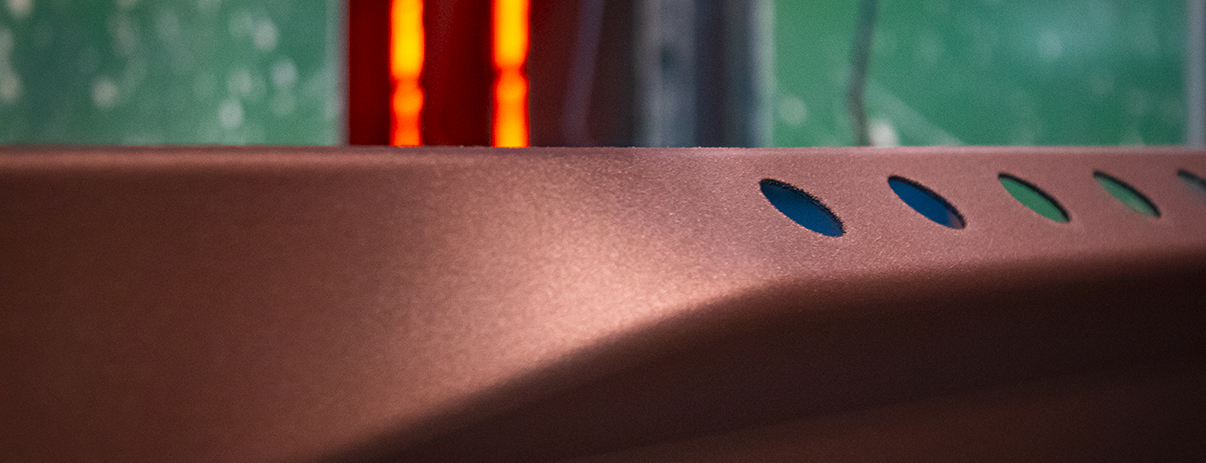
An enamelled steel hob offers exceptional properties. The surface resulting from the enamelling process offers ideal chemical and physical properties for use in the kitchen. Enamelled products are non-toxic, strong and durable, enabling them to meet basic quality and health standards. An enamelled steel hob is able to withstand high temperatures and its surface is even, uniform and hygienic. It is also naturally easier to clean.
The ceramic used for enamelling steel hobs is based on borosilicate, an extremely hygienic and compact material. It fuses with metal during the firing process at 840C° to give rise to material with new chemical and physical properties. Unlike paint, which is subject to wear and corrosion, enamelling is able to withstand attacks from acids and high temperatures, while ensuring hygiene and non-toxicity when in contact with foodstuffs. The uniform, non-porous surface also makes cleaning easier.
Smalterie Vicentine offers a wide choice of solutions and finishes for your enamelled steel hob project. Our processes and production lines offer a high guarantee of quality and the flexibility to customise colours.

HOUSEHOLD APPLIANCES
READ
Smalterie Vicentine began working with household appliances back in 1958 and still leads the field because it can offer the best know-how on the market. All parts of built-in ovens and free-standing cookers can be enamelled: internal surfaces, pans, interior doors, muffles and fan covers.
Our enamels are specially designed to withstand high temperatures. They are easy to clean and make components sturdier, more hygienic and easier to maintain and clean.
Every powder-enamelled product intended for use on food contact surfaces is covered by MOCA certification.
This makes our enamelling process particularly suitable for self-cleaning ovens (equipped with catalytic or pyrolytic processes) that use very high temperatures for their self-cleaning processes. The enamelling with a porous finish applied to the panels used in catalytic ovens is ideal for the cleaning process, which dissolves fats to form volatile substances. Enamels intended for pyrolytic ovens are designed to optimise the temperature threshold that the materials can withstand, because the self-cleaning process in such ovens takes place at very high temperatures (around 380° C) over a long time period.
The most common finishes for the enamelling appliances are black and grey, but custom colours and finishes can be ordered.
STOVES AND FLUES
READ
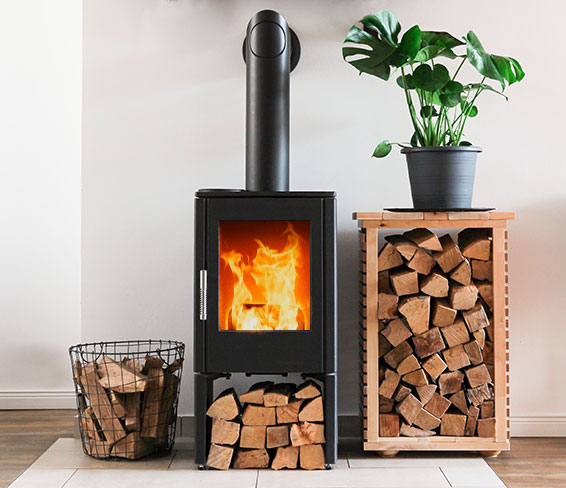
Enamelling has been widely used in the stove sector, which is an extension of the oven sector, for many years. All metal components of stoves can undergo enamelling, including the external sides of the product, the combustion chamber, the ash drawer or the smoke evacuation ducts.
Wood or pellet burning stoves need to withstand high temperatures and ensure a long service life in the winter months and beyond. Enamelling processes can improve the resistance thresholds of components due to the chemical and physical processes used to fuse glass and metal when firing at 840 C°.
The element that emerges from the ceramic enamel application process is a new element with improved mechanical and thermal resistance that is better protected against abrasion and the action of corrosive substances. The uniform, non-porous surfaces obtained with enamelling also give the product a more attractive appearance that can be enhanced by custom finishes and colours
The application of enamelling fuses enamel particles to metal particles to create a material with unique characteristics. This property makes the process particularly suitable for fume evacuation ducts and flue accessories and it is used in the construction of thermal power stations, heating and air conditioning systems, boilers, fireplaces and hearths and for pellet and wood stoves. It is also used to produce all elements subject to wear due to the action of high combustion temperatures and oxidation.
WORKTOPS RESISTANT TO BACTERIA AND VIRUSES
READ
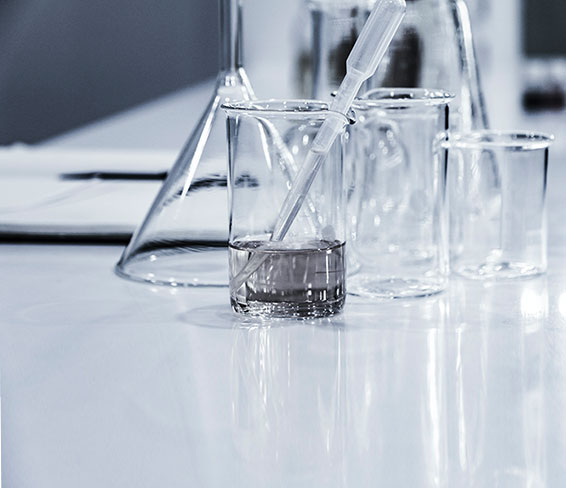
Because enamel is a resistant material with unique hygienic properties, it is increasingly being used in the medical, chemical and pharmaceutical sectors. Medical workbenches and surfaces used for test laboratories and chemical analyses can benefit from enamel’s property of maintaining a low level of bacterial contamination and being extremely easy to clean, even using harsh compounds.
Because enamel makes the metal smooth, bacterial colonies cannot find any cracks and crannies where they can gain a foothold. Due to enamel’s scratch-proof qualities, this characteristic can be maintained over time, and its ability to withstand abrasion allows cleaning operations to be carried out using acids and strong disinfectants.
Enamel application is not a simple coating operation. It is a chemical and physical process whereby glass and metal are heated to very high temperatures (840 C°), giving rise to a completely novel material. This is made up of molecules generated by a fusion process that confers unique properties: resistance to corrosive agents, hardness and durability, non-toxicity and hygiene, resistance to abrasion and surface uniformity. All these properties make enamelling very suitable for laboratories and medical rooms where the bacterial contamination level of work surfaces must be kept very low.

ARCHITECTURAL ELEMENTS
READ
Enamel is also applied in the world of architecture and design.
Enamelling is the ideal solution when parts need to be good-looking but also hard and resistant to oxidation and rust, when they need to be exposed to the action of atmospheric agents without losing their properties, or when they need to withstand fire or the corrosive action of acids.
In particular, porcelain enamel is used to finish metal and sheet metal surfaces, such as profiles or accessories, external cladding panels or metal cores used in concrete. Enamelling is more than just a coating. It is unique in combining the physical and chemical properties of glass with those of metal due to the very hot firing process. This makes it the best solution when customers need to give a material specific properties of resistance to corrosion, humidity and oxidation.
Note: Smalterie Vicentine S.r.l. can enamel elements measuring up to 1,200 cm x 1,000 cm

FROM AN IDEA TO A DESIGN
READ
Blue-chip customers, in-depth knowledge of materials, processes and sectors, a market presence for over 60 years, tradition combined with innovation – and corporate values that respect people, the environment and principles of efficiency. These intangible assets are all aspects of Smalterie Vicentine’s corporate identity that make us proud.
These characteristics, combined with cutting-edge plants and ongoing research into porcelain enamel applications, make Smalterie Vicentine your ideal partner for the design, development and production of new projects in different fields. We can help when you are looking for manufacturing solutions for a product that is strong and durable, resistant to high temperatures, very hygienic, resistant to abrasion, scratches and the corrosive action of acid substances, easy to clean and good-looking – and available in different colours with a choice of glossy or matte finishes.
CHARACTERISTICS OF THE ENAMELING
PORCELAIN ENAMEL: THE STRENGTH OF GLASS COMBINED WITH METAL
Porcelain enamel is an inorganic, vitreous coating used on metals for protective, functional and decorative purposes.
As described on the pages describing our enamelling systems, this extraordinary element is generated by chemical and physical processes that result in a brand new material.
Once the enamel has been applied to the metal by means of an appropriate process (wet enamelling or powder enamelling), the enamelled component is passivated (only in the case of wet enamelling) and undergoes vitrification firing, which gradually heats everything to 840° C and maintains this temperature for 3 minutes. This process creates a new material that combines the properties of glass (hygiene and hardness) with those of metal (strength, deformability and lightness). No organic material could exceed the temperature thresholds at which enamel is fired.
The combination of two such different materials gives outstanding results and versatility in terms of looks and performance.
ENAMELLING VERSUS PAINTING
| ENAMELLING | PAINTING |
|---|---|
| enamelling is inorganic | painting is organic |
| an inorganic material can be fired at 840C° | an organic material cannot be fired at high temperatures |
| lo smalto è fragile ma resiste alle alte temperature, non si graffia e non cambia colore, lo smalto, inoltre, è molto refrattario agli attacchi delle sostanze acide (acido citrico, limone, pomodoro, ecc.) | la vernice è meno fragile ma anche meno resiste alle alte temperature, si può graffiare e cambia colore nel tempo perché mantiene una certa porosità e sensibilità alla luce |
| The molecular structure of enamel means that bacteria cannot penetrate it, which makes it very suitable for applications where absolute hygiene is required. | paint is less suitable for applications where hygiene is a priority |