

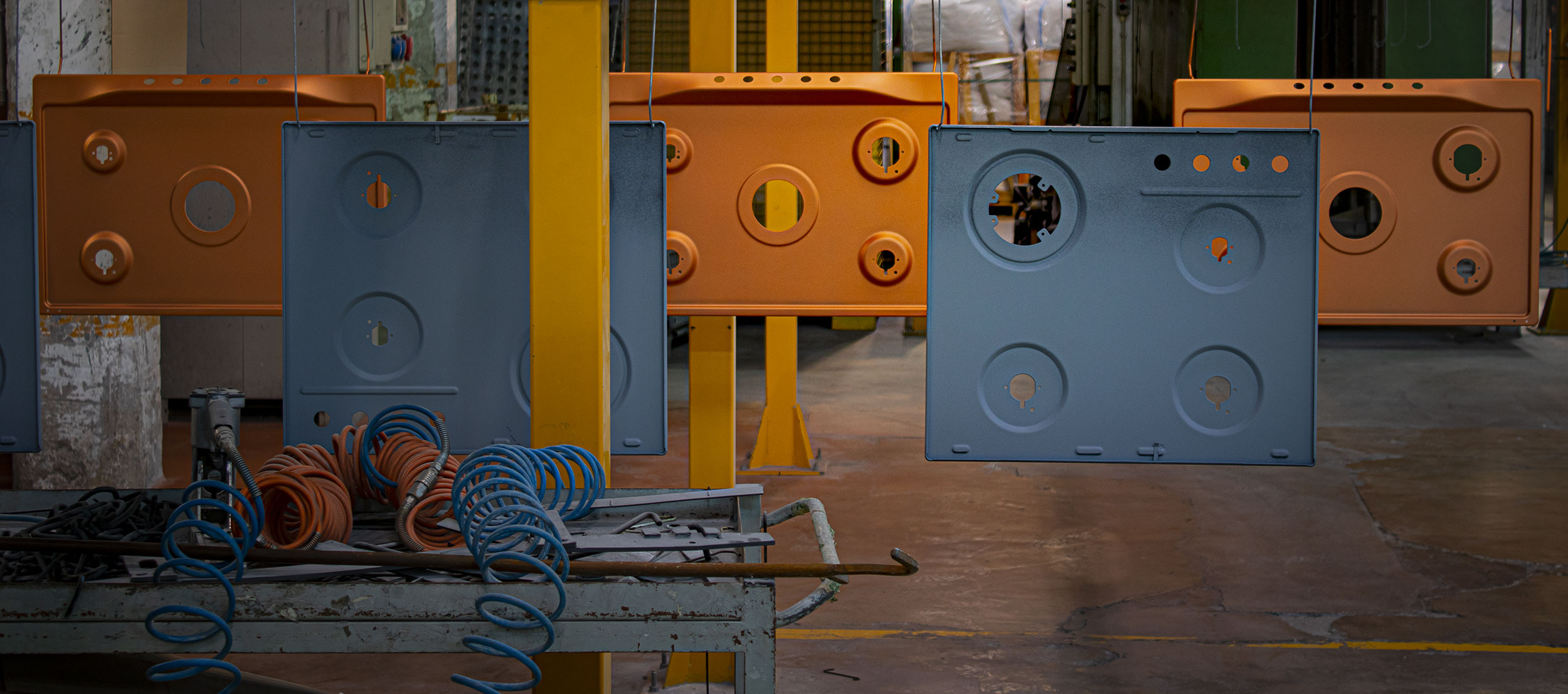
Enamelling: new generation systems

PREPARING ENAMEL SLIP IN A MILL
A great deal of experience is required to prepare the enamel slip. The recipes are secret, and the knowledge has been handed down from generation to generation, just as in an artisan’s workshop.
This is how it’s done: you need a type of glass known as “frit”, a lot of water, colouring elements and thickeners, which are dosed according to the company’s secret recipes. Our formulas and recipes are the reason why our enamel is such high quality, and we guard them jealously. The compound is placed in the mills where it is ground. The mill speed and rpm settings are adjusted according to the type and colour of enamel being processed. Balls are placed inside the mill to grind and blend the mixture uniformly.
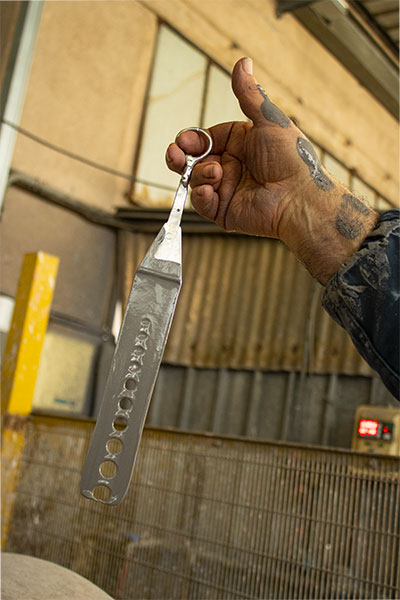
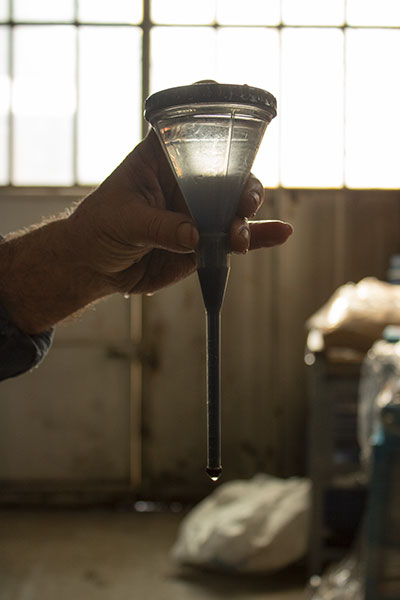
During the process, the miller performs the necessary tests with dosimeters, funnels and – lastly – a Bayer knife. The product is not placed straight into the machine when it comes out of the mill. First it undergoes an additional check to ensure that density and brightness parameters comply with further quality standards.
Metal enamelling powder wet
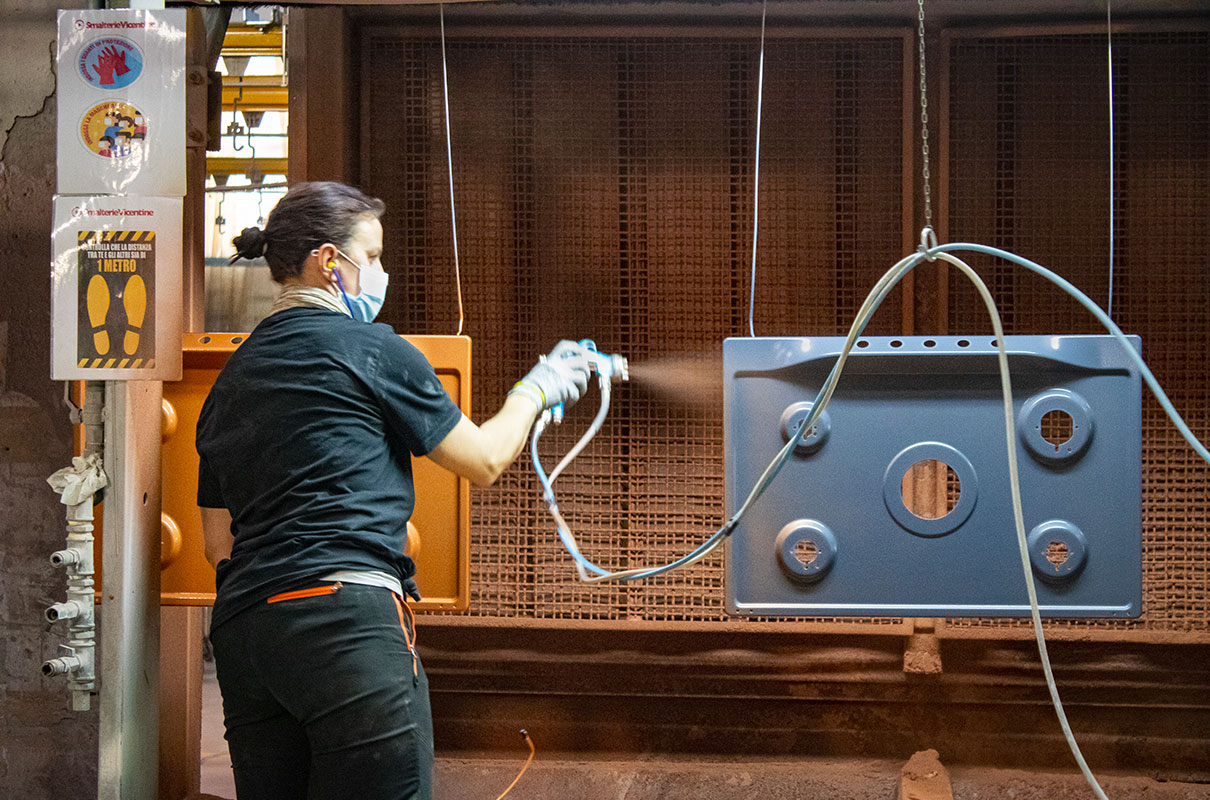
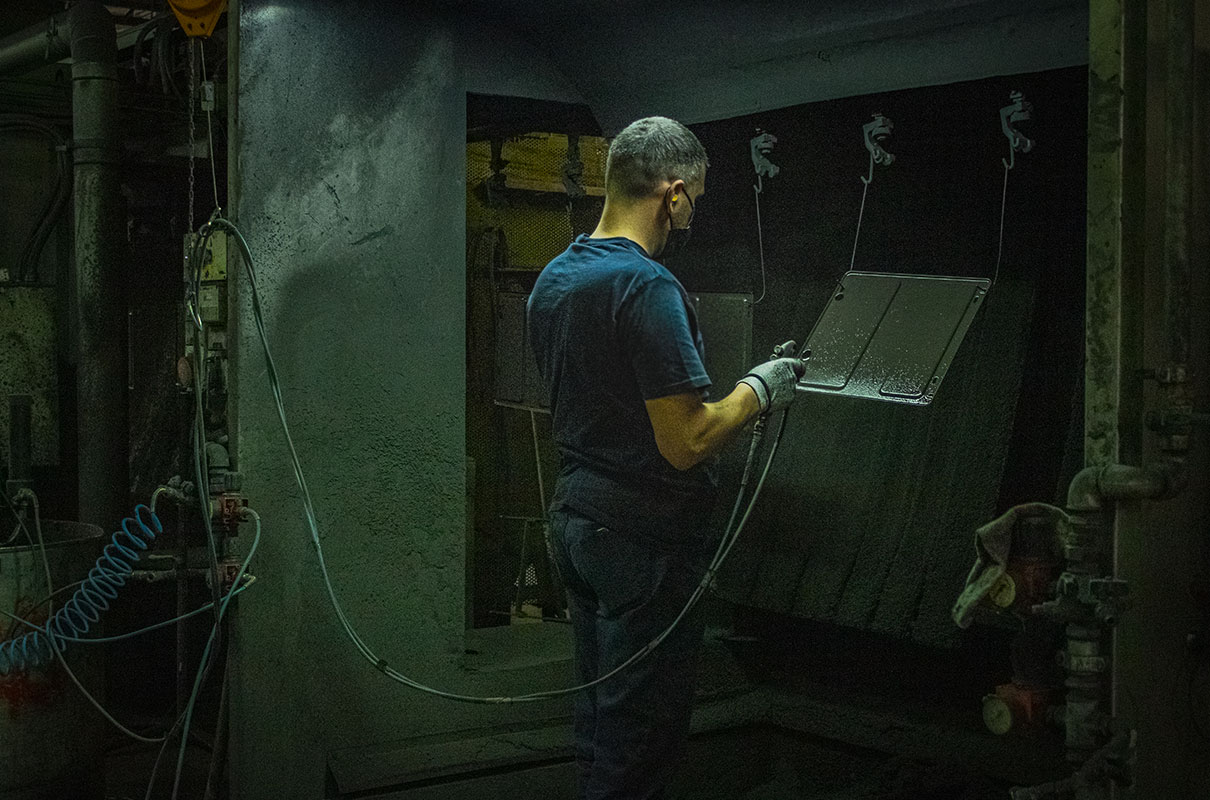
When the metal arrives ready to undergo the enamelling process, it does not need pickling and is placed on the powder enamelling machine after being electrostatically charged. The enamel is sprayed on with guns and adheres to the sheet metal.
TYPES OF ENAMELLING
Only some sheet metals are suitable for enamelling*. Enamel can be applied to copper and aluminium but in the former case it is purely aesthetic, i.e. used for jewellery and designer items. Enamelled aluminium or cast iron, on the other hand, is used to make cookware and other designer creations. Smalterie Vicentine is mainly concerned with enamelling DC ED and DC EK steels.
__
* Enamelled sheets according to UNI-EN 10209 standard: DC01 EK (for profiles), DC04 EK (for deep drawing), DC06 EK (for extra deep drawing), DC03 ED (for light gauge drawing), DC04 ED (for deep drawing) and DC06 ED (for extra deep drawing).
__
GREEN
Smalterie Vicentine is fully compliant with regulations on the use of banned substances such as nickel or cadmium, lead or other heavy metals, which have been eliminated.
Purification plants have been in use since 1973 and the water used for pickling is taken from a well owned by the company, only partly supplemented by mains water. After use, the water is purified and released into the drainage system in compliance with parameters laid down by the Veneto Regional Agency for Environmental Prevention and Protection (ARPAV).
Spraying residues, particularly those produced by the wet process, are recovered, classified with the appropriate EWC codes and disposed of by certified companies.
All enamels come with technical data sheets and safety data sheets. Since the enamels are subject to MOCA regulations requiring surfaces that come into contact with food to be compliant with relevant standards, the products are safe for use inside and outside the home. Enamel does not release toxic substances.
FIRING
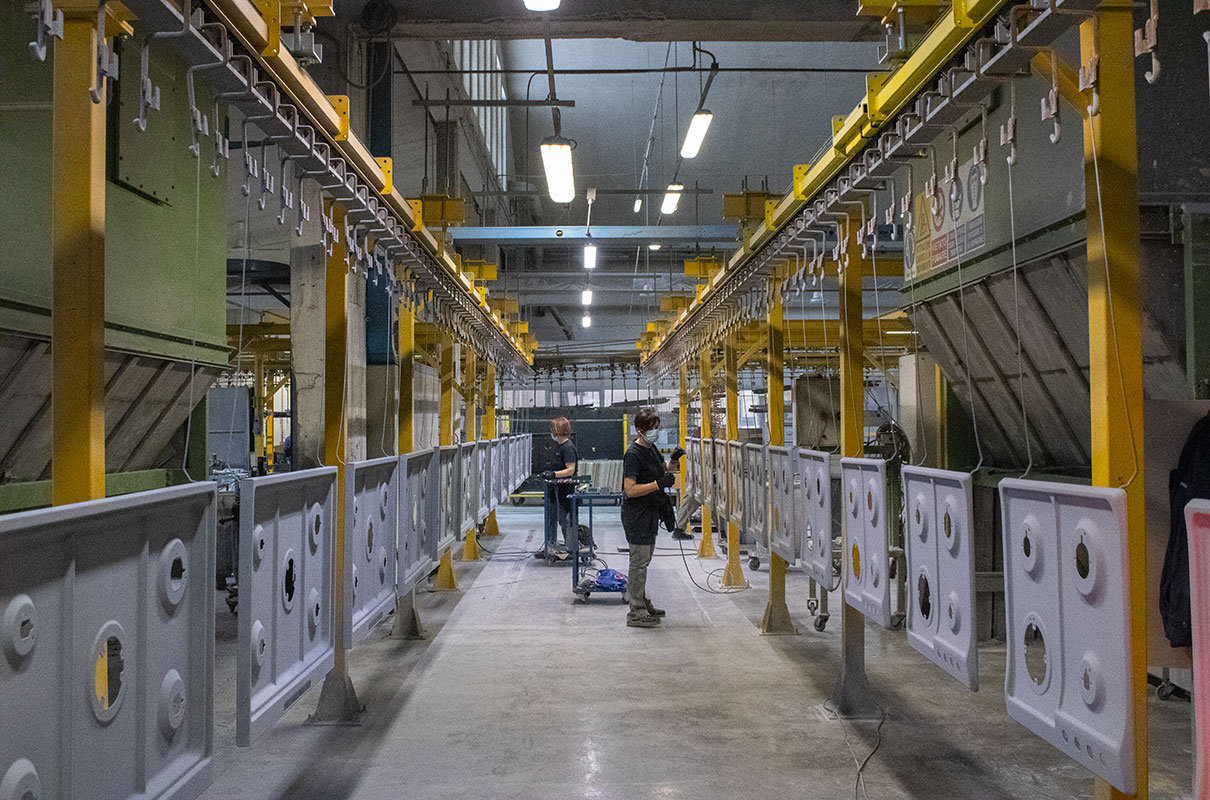
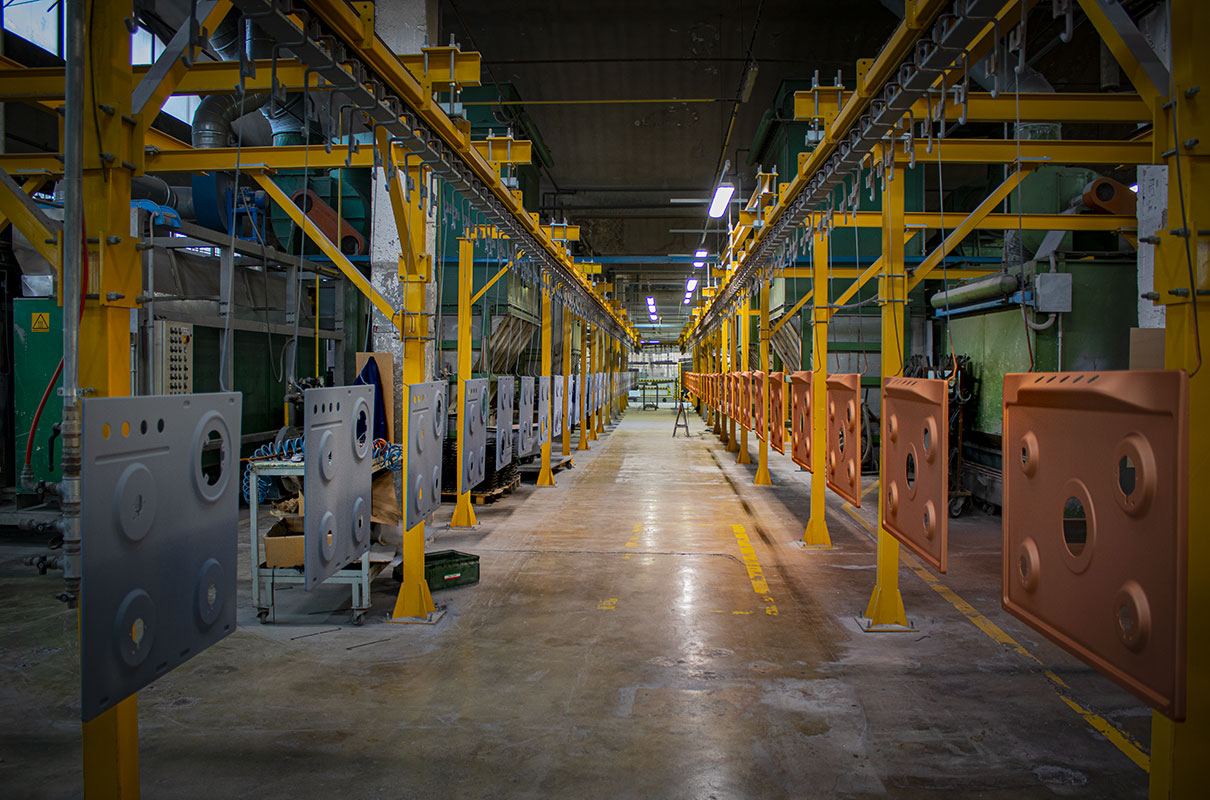
Once the enamel has been applied to the workpieces on the powder or wet line, the workpieces are taken and transferred to the firing line, where they enter the kiln. In order for the vitreous elements to fuse with the metal, the firing must gradually heat the enamelled components to a temperature of 840C° and then maintain them in that state for at least 3 minutes. Similarly, cooling must be gradual.
STORAGE AND SHIPPING
Each workpiece is placed in special cages, packed and stored ready for shipment.